The Sower and the Virgin – The Circumstantial Evidence

Continued from The Testimonies Of Scripture Relied Upon For The Defence.
THE CIRCUMSTANTIAL EVIDENCE
Let us first remark that Christ showed Himself ten times after His resurrection. The first time He showed Himself to Mary Magdalene; but He never showed Himself to Mary His mother. It does not even appear that she was permitted to be present at His ascension. All the eleven were there to witness His last moments in visible flesh upon the earth, and His triumphant ascent into heaven; but His mother was not there. The sword was still in her soul.
Previously to His ascension, while walking to Emmaus, Christ expounded to the two disciples “in all the Scriptures, the things concerning Himself.” But He does not appear to have mentioned His mother.
While yet on earth, His disciples petitioned Him thus: “Teach us how to pray!” In the model prayer which our Lord recited, He did not devote a single phrase to addressing His mother, or any saint.
In the Acts of the Apostles (xx. 17, 21) we read of Paul, at Miletus, expounding, to the elders of the Church of Ephesus, the whole counsel of God, and “keeping back nothing that was profitable”; and he summed it all up in “repentance toward God, and faith toward our Lord Jesus Christ.” But there was not a word about any intercession by the Virgin Mary, or by any saint,—not a word inducing us to offer any kind of worship either to Mary or to any saint.
When Jesus and Mary were on earth, Jesus showed an infinite love for sinners in dying for them. Mary did not. Jesus is God; Mary is not; and therefore the love of Jesus must be far more effectual than any love of Mary. The dying thief on the cross turned to Jesus, who was on the cross, and he was saved. He did not ask Mary, who was then at the foot of the cross, to intercede for him, or to pacify an angry God because he had just been “casting the same reproaches in His teeth” (Matt. xxvii. 44). We have not found throughout the whole Bible one single example of sinners who feared to go to Jesus, and who had to ask His mother to mediate and obtain their desire. Nor can we suppose that Jesus, by rising from the dead and sitting at the right hand of His Father, has lost His love or diminished His power. Nor have we the slightest warrant for supposing that He then gave any such tremendous power to Mary. Nor did He infuse into her soul, then pierced by the sword of remorse, His infinite and unchangeable love. Nor was there any need. If Christ’s love is infinite, and His power is infinite, what need could there be for another infinite love to spur His will, and another infinite power to work out His purpose? If Christ is the unchangeable God, He must abhor such a notion, and continue to proclaim (Isa. xlii. 8), “I am Jehovah: that is My name: and My glory will I not give to another”—not even to Mary. He must still be angry with those who (Rom. i. 25) “worship and serve the creature rather than the Creator.” He must still command us (Matt. iv. 10), “Thou shalt worship the Lord thy God, and Him only shalt thou serve.” He must still be warning us (John xiv. 6, 14), “No one cometh unto the Father but by Me”; and, “If ye shall ask anything in My name, I will do it.” He must still be beckoning us, and calling to us (Matt. xi. 28), “Come unto Me, all ye that labor and are heavy laden, and I will give you rest.”
If the Romanists urge us to worship the Virgin Mary, and call her our “advocate,” and “intercessor,” and “mediatrix,” we will reply (Rom. viii. 26): “The Holy Spirit Himself maketh intercession for us, with groanings that cannot be uttered… He maketh intercession for the saints.” And of Jesus we shall say (Acts iv. 12), “Neither is there salvation in any other; for there is none other name under heaven given among men, whereby we must be saved.” “For (1 Tim. ii. 5) there is one God, and one Mediator between God and men, the Man Christ Jesus, who gave Himself a ransom for all.” “Wherefore (Heb. vii. 25) He is able to save them to the uttermost that come unto God by Him, seeing He ever liveth to make intercession for them.”
We accept then the warning of Paul (Col. ii. 18): “Let no man beguile you of your reward in a voluntary humility and worshipping of angels… and not holding the Head, from whom all the body by joints and bands has nourishment.” We remember that when Cornelius knelt down before Peter (Acts x. 25, 26), “Peter took him up, saying, Stand up; I myself also am a man.” We remember that Paul (Acts xiv. 14) rent his clothes when they would worship him and Barnabas, and said, “We also are men of like passions with you, and preach unto you that ye should turn from these vanities [i.e., worship of dead heroes or saints] unto the living God.” We remember that John (Rev. xix. 10), impersonating the Church, fell down at the feet of the angel, and was rebuked with the words, “See thou do it not; for I am thy fellow servant, and of thy brethren that have the testimony of Jesus; worship thou God.” Again, at a later period, he was thus rebuked (Rev. xxii. 8): “See thou do it not; for I am thy fellow servant, and of thy brethren the prophets… worship God.”
Wherefore we decide with David (Ps. xlii. 8), “My prayer shall be unto the God of my life”; and (Ps. lxv. 2) we say to God, “O Thou that hearest prayer, unto Thee shall all flesh come [to pray].” With Solomon also we reject the Virgin Mary and saints, and address God thus (1 Kings viii. 39): “Thou, even Thou only, knowest the hearts of the children of men.”
To the Romanists we repeat the prophetic warning of Moses to the Church of Israel (Deut. xiii. 1): “If there arise among you a prophet… saying, Let us go after other gods, which thou hast not known, and let us serve them; thou shalt not hearken unto the words of that prophet… for the Lord your God proveth you, to know whether ye love the Lord your God with all your heart, and with all your soul.” Also the prophetic warning of Paul (Gal. i. 7–9): “There be some that trouble you, and would pervert the gospel of Christ. But though we, or an angel from heaven, preach any other gospel unto you than that which we have preached unto you, let him be accursed. As we said before, so say I now again, If any man preach any other gospel unto you than that ye have received, let him be accursed.”
Continued in The Dead In Christ
Related posts:

Loyalty to the Catholic Church Above Loyalty to Country
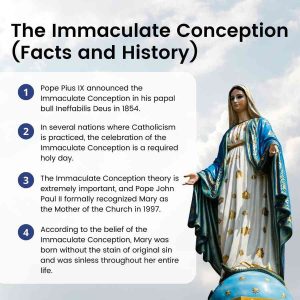
The Sower and the Virgin – Immaculate Conception
The Perversion Of Dr. Newman To The Church of Rome - By Charles Chiniquy Part II.

Roman Catholicism By Lorraine Boettner Chapter V Peter

Who are the Kings of the East Mentioned in Revelation 16:12?

Liberalism: Its Cause And Cure - Chapter Five: Defending Morality

Have You Been Duped by Dispensationalism?
The ‘Judaeo-Christian Heritage’ Hoax